

Selecting a coffee machine with a milk frother depends on how much manual effort you prefer versus the level of automation you need. Some models require you to grind beans and tamp grounds yourself, while others use pods or one-touch menus to handle every step. The best choice balances your daily routine with your preferred coffee style.
As an Amazon Associate, we earn from qualifying purchases. This post contains affiliate links – if you buy through them, we may earn a commission at no extra cost to you.
Best overall: Breville Barista Express, which provides a professional-style manual experience with an integrated grinder and precise temperature control for those who want to master their own espresso extraction.
Best for automated ease: De’Longhi Magnifica Duo, which offers the most hands-off experience by automating drink selection and milk frothing for a wide variety of preset coffee recipes at home.
Best for drip coffee lovers: Ninja 10-Cup Frother, which is perfect for households that need the versatility of different carafe sizes alongside a dedicated frother for occasional specialty lattes.
This guide is for anyone looking to upgrade their morning coffee routine with a reliable machine that handles milk frothing.
How We Picked
We compared 48 different coffee machine listings to find the top options available on Amazon. To make the list, each product had to clearly state its technical capabilities, including brewing methods, milk frothing technology, and included accessories. We excluded any machines that lacked clear specifications regarding their heating systems or user controls. Our focus remained strictly on what the manufacturer’s listing confirms, ensuring that each recommendation is based on the features provided to the user.
1. Breville BES870XL Barista Express Espresso Machine

Best for: Enthusiasts who want to learn professional barista techniques.
The Breville Barista Express is built for those who take their coffee seriously. It features an integrated conical burr grinder that drops grounds directly into the portafilter, ensuring your coffee is as fresh as possible. The digital temperature regulation (PID) helps keep water at the right heat for extraction, while the steam wand lets you manually create microfoam for latte art.
This machine isn’t for someone who wants a quick, one-touch morning routine. You must learn to dial in the grind size and manually steam your milk to get the best results. It’s a hands-on tool for people who enjoy the process of crafting a specific, balanced cup of espresso.
Pros
- Integrated precision conical burr grinder
- Digital PID temperature control system
- Manual steam wand for microfoam
Cons
- Requires manual skill for quality
- Larger footprint on kitchen counters
2. De’Longhi Magnifica Duo Automatic Espresso Machine

Best for: Users who want many drink options with one touch.
This machine simplifies the coffee experience by offering 20 preset recipes, including iced lattes and cold brew. It uses three distinct brewing technologies to adjust pressure and temperature for each drink type. The LatteCrema system handles the milk frothing automatically for both dairy and plant-based alternatives. Since the carafe parts are dishwasher-safe, you save time on daily maintenance.
If you value speed, use the Cold Extraction Technology to produce cold brew in under three minutes. This is a significant upgrade over traditional methods that require hours of steeping. However, if you prefer to manually dial in your grind size or tamp pressure, this machine will frustrate you. It prioritises consistent, automated results over granular control.
Choose this model if your household demands variety and convenience without a steep learning curve. If you instead seek the craft of a manual barista setup, look elsewhere. The integrated conical burr grinder ensures freshness, but it requires regular cleaning to maintain that quality.
Pros
- Twenty preset drink recipes
- Automatic milk frothing technology
- Dishwasher-safe milk system parts
Cons
- Fewer manual adjustment options
- Complex internal systems require care
3. Ninja 10-Cup Frother
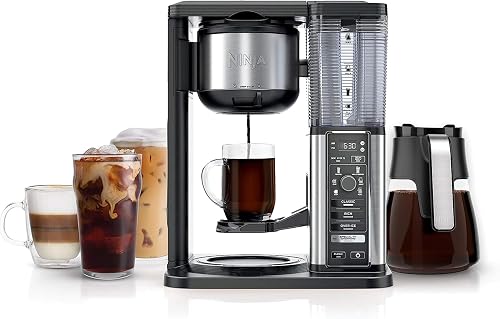
Best for: Families needing both carafe coffee and specialty drinks.
The Ninja 10-Cup Frother is a flexible machine that handles everything from a single cup to a full carafe. It features four brew styles and six size settings, allowing you to choose between classic, rich, or iced coffee. The fold-away frother is a simple addition that turns milk into foam, making it easy to create lattes at home.
This machine doesn’t use high-pressure espresso extraction, so it isn’t for the dedicated espresso drinker who wants a traditional shot. It’s best suited for those who primarily drink drip coffee but want the ability to make specialty-style drinks occasionally.
Pros
- Versatile brew sizes and styles
- Fold-away frother saves space
- Removable water reservoir for filling
Cons
- Not a true espresso machine
- Requires manual milk frothing
4. Keurig K-Cafe SMART Single Serve Coffee Maker

Best for: People who love the convenience of pods.
The Keurig K-Cafe SMART uses K-Cup pods to make coffee, lattes, and cappuccinos. With WiFi connectivity, it can use BrewID technology to recognize your pod and suggest the best settings. The integrated frother has multiple speed settings and can even froth cold milk, giving you plenty of options for different drinks.
This machine isn’t for those who prefer grinding their own fresh beans. It relies entirely on the K-Cup system, which limits your choice of coffee to what is available in pod form. It’s the ideal pick for someone who values speed and minimal cleanup above all else.
Pros
- Simple pod-based brewing system
- WiFi-enabled for app controls
- Cold and hot milk frothing
Cons
- Dependent on K-Cup pods
- Less control over grind quality
5. Ninja® Luxe Café Premier 3-in-1 Espresso Machine
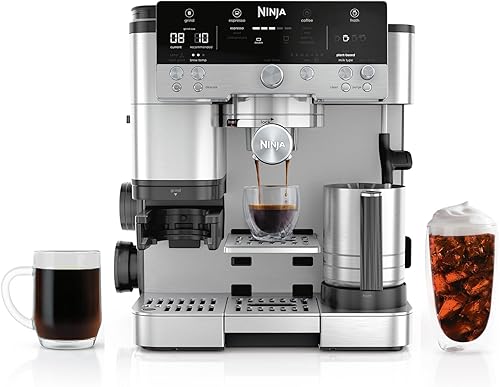
Best for: Home baristas who want assisted brewing technology.
The Ninja Luxe Cafe acts as three machines in one, handling espresso, drip coffee, and cold brew. It features Barista Assist Technology, which helps with grinding, dosing, and tamping to ensure the puck is pressed correctly. The dual froth system is hands-free, meaning you select your foam style and let the machine finish the job.
This machine isn’t for the traditionalist who wants to do everything manually. While it offers high-end features, the automated assistance is designed to remove the guesswork, which might frustrate users who want full manual control over every step of the process.
If you’re a beginner, use the 25 grinder settings to match your specific drink. If you prefer a smoother, more flavourful profile, select the cold-pressed espresso function. You can brew drip coffee or cold brew in six different sizes, ranging from 6 to 18 ounces.
Pros
- Versatile multi-system brewing capability
- Hands-free automatic milk frothing
- Assisted tamping and dosing
Cons
- Large number of accessories
- Complex setup for beginners
- Not designed for manual control enthusiasts
6. De’Longhi Stilosa Compact Manual Espresso Machine

Best for: Beginners starting their espresso journey.
The De’Longhi Stilosa is a compact manual machine that focuses on the basics. It features a stainless steel boiler engineered for longevity and a manual steam wand to texture milk for lattes and cappuccinos. The kit includes a portafilter, a measuring scoop that doubles as a tamper, and two filters for single or double shots. This provides a straightforward way to learn the fundamentals of espresso preparation.
You must buy a separate grinder to use this machine, as it lacks built-in grinding capabilities. If you prefer effortless convenience or advanced digital controls, this model will frustrate you. It’s a bare-bones tool that requires you to master manual tamping techniques yourself. Expect a learning curve; if your espresso tastes sour or thin, your grind size or tamping pressure is likely off.
Pros
- Compact and simple design
- Durable stainless steel boiler
- Reliable manual steam wand
Cons
- No built-in coffee grinder
- Manual operation requires practice
7. De’Longhi All-in-One Espresso & Coffee Maker
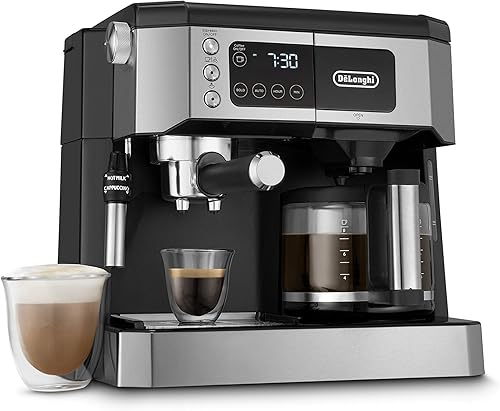
Best for: Households that drink both espresso and drip coffee.
The De’Longhi All-in-One uses a dual heating system, so you can brew a full pot of coffee and espresso at the same time. It features a digital touchscreen and a 24-hour programmable timer, which is great for waking up to a fresh carafe. The advanced steam wand allows you to choose between micro-foam or thicker cappuccino foam.
This machine isn’t for someone who has limited counter space, as it combines two brewing systems in one large unit. It’s best for a shared kitchen where different people have different preferences for how they take their coffee.
Pros
- Simultaneous espresso and coffee brewing
- Programmable timer for convenience
- Advanced steam wand for foam
Cons
- Large footprint on counters
- Requires two types of coffee
8. AMZCHEF Espresso Machine With Grinder

Best for: Enthusiasts who want precise grind control.
The AMZCHEF Espresso Grinder offers 44 grind settings, giving you significant control over your coffee texture. It includes a precision temperature control system that lets you adjust from 190℉ to 201℉. The machine also features a cold brew mode and a powerful steam wand for making microfoam.
This machine isn’t for users who want a simple, push-and-go experience. With so many settings, it’s designed for someone who wants to experiment with different beans and roasts to find their perfect cup. If you prefer to keep things simple, the number of options may feel unnecessary.
Pros
- Wide range of grind settings
- Precision water temperature control
- Dedicated cold brew mode
Cons
- Too many settings for beginners
- Requires time to dial in
9. Chefman CaféMaster Pro Espresso Machine

Best for: Entry-level users wanting automated milk frothing.
The Chefman CafeMaster Pro brings café-style drinks to your kitchen with minimal effort. It features a 15-bar pump and an automatic frother that dispenses steamed milk directly into your cup. The internal cleaning function keeps the machine tidy, while the 1.8-litre reservoir holds enough water to serve multiple guests without constant refilling.
If you prefer to customise your drink, use the automated controls to select single or double espresso shots. This machine isn’t for those who want to use their own specialized tamping techniques or manual steam wands. Because it automates the milk delivery, you trade manual control for speed. If you prioritise a quick, consistent latte over adjusting micro-foam texture by hand, this is your machine.
Pros
- Automatic milk dispensing frother
- Simple push-button operation
- Internal self-cleaning function
Cons
- Less control over milk texture
- Requires specific ground coffee
Should you struggle with the setup, the unit includes a 1-year assurance to protect your purchase. Always ensure you use ground espresso to match the portafilter requirements for the best results.
10. Nespresso Vertuo Pop+ Coffee Machine with Milk Frother

Best for: Small spaces and quick, single-serve coffee.
The Nespresso Vertuo Pop+ is a compact machine that uses hermetically sealed capsules to preserve freshness. It features unique brewing technology designed to create a rich crema on every cup. It’s very easy to use and clean, making it a good choice for someone who wants quality coffee without any mess.
If you struggle with counter space, this unit’s slim footprint ensures it fits into the tightest kitchen corners. You should choose this model if your priority is a consistent, high-quality drink produced in seconds. However, if you prefer experimenting with different bean origins or grind sizes, this system will frustrate you.
It’s strictly a pod-based system, so you’re limited to the variety of pods provided by the manufacturer. You can’t use fresh-ground beans or create your own latte art. If you require absolute control over water temperature or pressure, look elsewhere. This machine is for the user who values speed and simplicity above all else.
Pros
- Extremely compact design
- Simple push-button operation
- Consistent crema quality
Cons
- Limited to Nespresso pods
- No manual brewing control
How to Choose in Sixty Seconds
Which features actually matter for a home setup?
Focus on the brewing method first. If you want espresso, you need a machine with a pump and a portafilter, like the Breville Barista Express. If you prefer convenience, pod-based machines like the Nespresso Vertuo Pop+ or Keurig K-Cafe SMART are better. For milk, decide between a manual steam wand—which takes practice but gives you control—or an automatic frother, which is faster but less flexible. Always check the water reservoir size; a larger tank means less refilling.
Should I prioritise a built-in grinder?
An integrated grinder is excellent if you want fresh coffee without cluttering your counter with a second machine. Models like the Ninja Luxe Cafe or AMZCHEF Espresso Grinder handle the grinding and brewing in one unit. If you have limited space and want a streamlined process, an integrated grinder is worth the investment. If you’re a hobbyist who loves experimenting with different types of burrs and settings, you might prefer buying a dedicated, high-end grinder separately.
What should I confirm before ordering?
Check the physical size of the machine against your available counter space. Many combination machines, like the De’Longhi All-in-One, are quite large. Next, confirm the milk frothing style. If you want to make latte art, you need a manual steam wand. If you just want frothed milk for a cappuccino, an automatic system is fine. Finally, look at the maintenance requirements. Some machines have self-cleaning cycles, while others require manual flushing of the steam wand after every use. Ensure the machine you choose matches the amount of time you’re willing to spend on daily cleaning.
The Breville Barista Express remains a top choice for those wanting a professional-style experience, while the De’Longhi Magnifica Duo is the best pick for users who want total automation. Before you buy, measure your counter space to ensure the machine fits comfortably. Check if you prefer the ritual of grinding your own beans or the speed of a pod system. Once you decide, look for the machine that offers the specific milk frothing style you enjoy most. Start by clearing your counter to make room for your new setup and get ready to enjoy your first home-brewed café drink.
Related guides
- Teka Kitchen Appliances Reviews : Best Buys for Modern Homes
- How to Decorate Kitchen Counters: Stylish Ideas for Every Home
- How to Decorate Kitchen Worktops: Creative Ideas for Every Home
Related reading: if you are still comparing options, see our guides to best coffee machines for frothing milk, best coffee machines for cappuccino, best coffee machines for flat whites and best coffee machines under 500.
Frequently Asked Questions
What kind of maintenance does a machine with a milk frother need?
Automatic frothers require regular cleaning to prevent milk residue buildup in tubes and nozzles. Most modern machines feature dishwasher-safe parts or automated internal cleaning cycles to flush the system after use. You must manually wipe and purge steam wands immediately to prevent clogs and off-flavours.
Is the simplest machine on the list enough?
The De’Longhi Stilosa is an excellent manual machine for beginners learning espresso fundamentals. It provides the essential pressure and heat required to pull a quality shot without the complexity of automated features. You will need a separate grinder and must be willing to learn manual tamping and steaming techniques.
What goes wrong first in these coffee machines?
Common espresso machine issues typically involve the milk frothing system or water heating elements. Manual steam wands often clog from dried milk, while automatic tubing may lose suction if improperly seated. Using filtered water and following the manufacturer’s descaling instructions is the best way to extend your machine’s lifespan.
Do I need to buy special accessories to get started?
Most machines, including the Chefman CafeMaster Pro and the Breville Barista Express, come with the essential items like a portafilter and a measuring scoop. However, you’ll likely need to buy a quality tamper if the one included is plastic or flimsy. Always check the “What’s in the box” section of the listing to see exactly what is included, as some advanced machines provide more tools than others.
Conclusion
Ultimately, the perfect brewer should feel like a natural part of your morning rhythm. Once you’ve picked your favourite, don’t forget to experiment with different bean roasts and milk types. You’ll soon find that crafting a café-quality drink at home is simpler than you’d think, and it’s a great way to start your day.