
A black kitchen is bold, modern, and surprisingly versatile. Many people think black will make their kitchen look small, cold, or too dramatic. But with the right approach, a black kitchen can be warm, welcoming, and deeply stylish. In fact, black kitchens are trending in both luxury homes and small city apartments.
They offer a timeless look that works in many interior styles, from ultra-modern to classic and even rustic.
But how do you decorate a black kitchen so it feels inviting instead of overwhelming? The secret is in the details—balancing colours, textures, lighting, and accessories. This guide will take you through everything you need to know. You’ll learn how to choose the right finishes, what materials work best, and how to add warmth and character.
There are also tips for small kitchens, open-plan spaces, and different budgets. Whether you’re planning a total renovation or just want to refresh your existing black kitchen, you’ll find practical advice and inspiration here.
Why Choose A Black Kitchen?
Black kitchens stand out. They make a statement and feel elegant. But what makes them so appealing?
Design flexibility is a big reason. Black pairs well with almost every other colour. You can use it as a base for bright accents, soft neutrals, or metallics. It works with wood, stone, and modern materials like glass and steel.
Practicality is another benefit. Black hides stains, fingerprints, and wear better than white or light colours. This makes it ideal for busy families or people who cook a lot.
Resale value is worth considering. According to a 2026 study by Zillow, homes with black kitchens sold for up to 2.5% more than expected in some markets. That means your investment in a black kitchen could pay off later.
Psychological impact matters too. Black feels solid, safe, and luxurious. In the kitchen, it creates a cosy, intimate space—even in large open-plan homes.
Planning Your Black Kitchen
Decorating a black kitchen starts long before you paint walls or buy cabinets. Careful planning saves money and prevents mistakes.
Set Your Goals
Think about how you use your kitchen. Is it for quick meals, family gatherings, or entertaining guests? Your answer will guide choices for layout, lighting, and storage.
Measure Carefully
Black surfaces absorb light, making spaces feel smaller. Accurate measurements are essential. You may need to adjust your plan to avoid a cramped feeling.
Choose Your Style
A black kitchen can be:
- Contemporary – with glossy cabinets and sleek finishes.
- Industrial – using rough materials like steel, brick, and concrete.
- Classic – with shaker doors and brass or bronze details.
- Scandi – combining black with pale wood and minimal decor.
- Rustic – adding warmth with reclaimed timber and vintage pieces.
Your style choice affects everything: cabinet shapes, handles, lighting, and accessories.
Plan The Layout
Most kitchens fit one of these shapes:
- Galley (two parallel counters)
- L-shape
- U-shape
- Island kitchen
- Peninsula
Black works in all layouts, but small spaces need extra care with lighting and reflective surfaces. In open-plan homes, black kitchens can help define the cooking zone.
Choosing Black Kitchen Cabinets
The cabinets are the heart of your kitchen. In black, they become the main feature.
Cabinet Finish: Matte, Satin, Or Glossy?
The finish changes the whole look:
| Finish | Look | Best For | Maintenance |
|---|---|---|---|
| Matte | Soft, modern, less reflective | Minimalist, Scandi styles | Hides fingerprints better |
| Satin | Subtle sheen, versatile | All styles | Wipes clean easily |
| Glossy | High shine, reflects light | Modern, small kitchens | Shows smudges more |
Pro tip: Glossy cabinets make small kitchens look bigger by reflecting light. Matte is popular for hiding smudges and creating a modern, understated look.
Material Matters
Popular options include:
- Laminate – Budget-friendly, many finishes
- Painted wood – Classic, can be repainted
- Acrylic – Ultra-glossy, durable
- Veneer – Real wood effect, luxury feel
Choose a material that fits your budget and lifestyle. For busy families, easy-clean surfaces are a must.
Two-tone Cabinets
All-black might feel heavy. Many designers use two-tone cabinets—black on the lower units, lighter colours above. This keeps things open and balanced.
Example: Black base cabinets with white or pale grey wall units.
Countertops That Work With Black
Your countertop is the main work surface. It must be tough, practical, and stylish.
Top Choices
- White or light quartz – Brightens the room and resists stains.
- Natural marble – Adds luxury, unique veining.
- Concrete – Modern, industrial vibe.
- Wood – Warms up the black and softens the look.
- Black granite – Dramatic and seamless, but needs good lighting.
Countertop Comparison
| Material | Pros | Cons | Style Match |
|---|---|---|---|
| Quartz | Non-porous, durable | Higher cost | Modern, classic |
| Marble | Unique look, cool touch | Can stain, needs sealing | Luxury, classic |
| Concrete | Custom shapes, tough | May crack, needs sealing | Industrial, modern |
| Wood | Warm, natural | Scratches, needs care | Rustic, Scandi |
| Black granite | Rich look, hard-wearing | Shows dust, needs light | Modern, luxury |
Insider tip: Light countertops reflect more light, making the kitchen brighter. Dark stone looks chic but needs extra lighting.
Backsplashes: Add Personality And Light
A backsplash is a chance to inject colour, pattern, or texture. It protects your walls and sets the tone for the kitchen.
Options That Work
- White subway tiles – Timeless, affordable, and bright
- Marble slabs or tiles – Adds natural veining and luxury
- Mirrored glass – Bounces light, makes the kitchen feel bigger
- Metal panels – Stainless steel or brushed brass for a modern look
- Textured ceramic – Adds interest without colour
A white or pale backsplash is the safest way to keep your black kitchen from feeling too dark. But a bold patterned tile can make a dramatic statement.
Common mistake: Using black backsplash with black counters and cabinets. This creates a “black box” effect. Add contrast for depth and interest.
Flooring To Anchor Your Kitchen
Your kitchen floor must handle spills, foot traffic, and cleaning. In a black kitchen, flooring is also a key design decision.
Top Flooring Choices
- Light wood or engineered timber – Adds warmth, softens the look
- Pale tiles (porcelain or ceramic) – Bright, practical, many styles
- Polished concrete – Industrial, cool, and hardwearing
- Patterned tiles – Add interest and break up black surfaces
What To Avoid
- All-black flooring. It can look too heavy and show dust.
- High-gloss tiles if you want a relaxed feel.
Expert insight: If your kitchen is open-plan, use a similar tone in the kitchen and living area. This keeps the flow and avoids a “boxed-in” look.
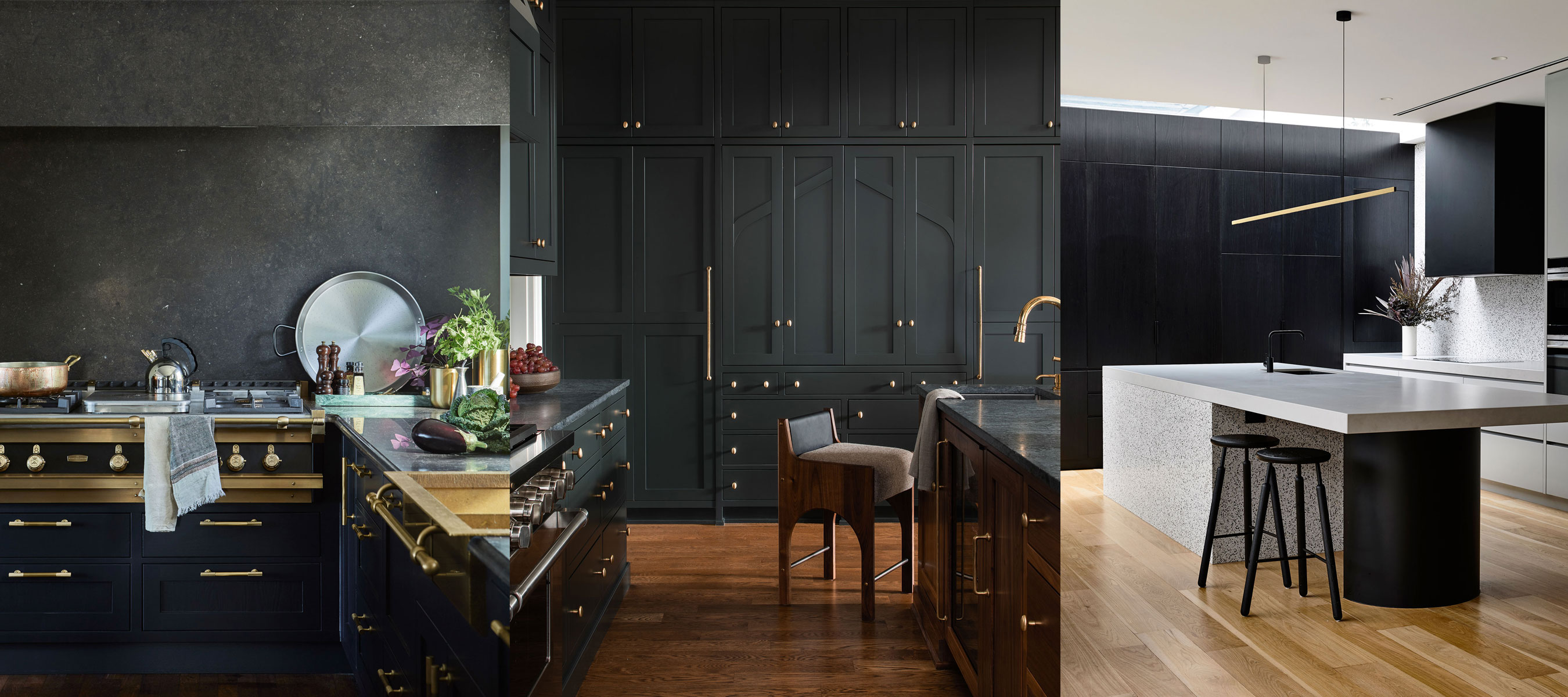
Credit: www.homesandgardens.com
Lighting: Essential For Black Kitchens
Good lighting is critical. Black absorbs light, so you need to layer different types.
Types Of Lighting
- Ambient lighting – Main ceiling lights or recessed LEDs
- Task lighting – Under-cabinet strips or spotlights for work areas
- Accent lighting – Pendant lights over islands, wall sconces for mood
Choosing Fixtures
Metallic finishes (brass, copper, or chrome) look stunning against black. Clear or frosted glass shades keep things bright. Oversized pendants or statement chandeliers can add personality.
Smart Lighting Ideas
- Use dimmable lights for flexibility.
- Add LED strips inside drawers and cabinets.
- Place switches near the work zones for convenience.
Non-obvious tip: Install lights with a “warm white” temperature (2700–3000K). Cool white can make black surfaces look harsh.
Adding Warmth: Colour, Texture, And Accessories
A black kitchen can feel cold if you don’t add softness and warmth.
Add Colour
- Soft neutrals (beige, taupe, blush) for walls, curtains, or stools.
- Bright accents (mustard, teal, emerald) in small doses—art, crockery, or vases.
- Greenery – Plants break up black and add life.
Layer Textures
- Wood – Shelving, stools, or handles.
- Fabrics – Linen blinds, cotton tea towels, woven baskets.
- Stone – Marble boards, granite trays.
- Metals – Brass handles or copper pendant lights.
Pro tip: Mixing textures is as important as mixing colours. A black kitchen with only shiny or only matte surfaces feels flat.
Accessorise Carefully
Too many gadgets or knick-knacks can clutter a black kitchen. Choose a few standout pieces—a designer kettle, bold art, or sculptural fruit bowl.
Example: Three matching copper pendant lights over a black island create a focal point.
Appliances: Blend In Or Stand Out
Appliances can be hidden or highlighted in a black kitchen.
Integrated Appliances
- Built-in ovens, fridges, and dishwashers create a seamless look.
- Choose black or dark grey for a unified style.
Statement Appliances
- A stainless steel cooker or brushed brass tap can become a feature.
- Retro fridges (like Smeg) add character.
Advanced tip: New “black stainless” appliances are fingerprint-resistant and blend perfectly.
Open Shelving Vs. Closed Storage
Storage style affects the feel of your kitchen.
Open Shelving
- Makes the space lighter
- Displays favourite crockery or plants
- Needs regular tidying
Closed Cabinets
- Hides mess
- Keeps the look streamlined
- Works well for small kitchens
Combination solution: Use open shelves for display and closed units for bulk storage.
:max_bytes(150000):strip_icc()/fin-6-b-black-ktichen-keuken20-5a6274269e942700366f965f.jpg)
Credit: www.thespruce.com
Black Kitchens In Small Spaces
Small kitchens can use black—if you plan carefully.
Tricks For Small Spaces
- Use glossy or reflective finishes to bounce light.
- Stick to two main colours (e.g., black and white) to avoid busy patterns.
- Add mirrors or glass-fronted cabinets.
- Keep worktops clear and use clever storage.
Case study: A 7-square-metre London flat used black cabinets, white worktops, and under-cabinet lighting to create a stylish but practical kitchen.
Black Kitchens In Open-plan Homes
Black kitchens work well in open layouts. They help define the kitchen area and add drama.
Zoning With Colour
- Use a black island or lower cabinets to “anchor” the kitchen.
- Soften edges with lighter worktops, shelving, or feature walls.
Connect Spaces
- Repeat black accents in dining or living areas (e.g., lamps, picture frames).
- Use the same flooring for a seamless look.
Real-world tip: In a family home, black kitchen units can hide everyday wear and tear in high-traffic zones.
Popular Black Kitchen Styles
Black kitchens are not one-size-fits-all. Here are the most popular styles and how to decorate them.
Modern Minimalist
- Flat-panel cabinets
- Push-to-open doors (no handles)
- Integrated appliances
- White or concrete worktops
- Sleek, geometric pendant lights
Classic Luxury
- Shaker cabinets with brass handles
- Marble worktops and splashbacks
- Glass-front display cabinets
- Statement chandelier
Industrial
- Black steel cabinets or shelving
- Exposed brick or concrete walls
- Open pipework
- Metal or reclaimed wood worktops
Scandinavian
- Black cabinets with light wood accents
- Pale flooring
- Simple, open shelving
- Lots of plants and natural light
Rustic
- Black cabinets with distressed wood
- Butcher block worktops
- Vintage taps and handles
- Open shelves with pottery and baskets
Non-obvious insight: Even small touches—like a black tap or wall light—can give your kitchen a modern edge without a full renovation.
Common Mistakes To Avoid
Decorating a black kitchen is all about balance. Watch for these traps:
- Insufficient lighting – The kitchen feels gloomy and impractical.
- No contrast – Using only black with dark worktops and floors makes the space oppressive.
- Wrong finish – High-gloss black shows fingerprints; matte can look flat if overused.
- Over-accessorising – Too many items create clutter, not style.
- Ignoring texture – Flat surfaces everywhere feel cold and lifeless.
Solution: Balance dark and light, mix textures, and plan your lighting.
Budgeting For Your Black Kitchen
A black kitchen can be affordable or high-end. Here’s a guide to where your money goes:
| Element | Budget Range (UK) | What Affects Cost |
|---|---|---|
| Cabinets | £2,000 – £15,000+ | Material, finish, custom vs. standard |
| Worktops | £800 – £5,000 | Material (laminate vs. marble) |
| Appliances | £1,000 – £7,000 | Brand, integrated vs. freestanding |
| Lighting | £200 – £2,000 | Number, design, installation |
| Flooring | £500 – £3,000 | Type, size of kitchen |
| Backsplash | £200 – £2,000 | Material, area covered |
| Accessories | £100 – £1,000 | Design brands vs. high street |
Savings tip: Mix high and low—splurge on key elements (like handles or splashback) and save on cabinets or accessories.
Sustainable Choices For Black Kitchens
Eco-friendly options are growing in popularity.
- Recycled materials – Some worktops use recycled glass or stone.
- Certified wood – Choose cabinets made from FSC-certified timber.
- Low-VOC paints – Reduce fumes and are better for health.
- LED lighting – Uses less energy and lasts longer.
- Second-hand – Salvaged handles, vintage lights, or reused cabinets.
Advanced tip: Matte black finishes made from recycled PET plastic are both durable and sustainable.
For more on eco-friendly kitchen materials, see the Architectural Digest guide.

Credit: www.decorilla.com
Case Studies: Real Black Kitchens
Urban Apartment
A Manchester flat uses matte black cabinets, white quartz counters, and smoked glass splashback. Brass handles and pendant lights add a touch of glamour. The owner chose open shelving for everyday items and closed cabinets for clutter. Under-cabinet lighting keeps work zones bright.
Family Home
A semi-detached house in Leeds blends black shaker cabinets with a warm oak floor. The kitchen opens to the dining area, so a black island helps zone the space. Pale grey walls and ceiling-height windows prevent the kitchen from feeling dark.
The family picked easy-clean laminate and tough quartz for durability.
Small Studio
In a 5-square-metre kitchen, a single wall of glossy black cabinets is paired with white metro tiles and stainless steel appliances. A mirrored splashback and open shelves make the space feel bigger. Clever storage (including drawer organisers and a pull-out pantry) keeps everything tidy.
Lesson: Each kitchen uses black differently but balances it with light, texture, and practical design.
Frequently Asked Questions
How Do I Keep A Black Kitchen From Feeling Too Dark?
The most important step is layered lighting—use ceiling, under-cabinet, and accent lights. Pair black with light colours for worktops, splashbacks, or walls. Add reflective elements like glass, mirrors, or metallics. Keep windows uncovered as much as possible for natural light.
Are Black Kitchens Hard To Clean?
Black hides stains and spills better than white, but glossy black can show fingerprints and dust. Choose a matte or satin finish if you want less maintenance. Microfibre cloths and gentle cleaners are best for regular cleaning.
What Worktop Colours Look Best With Black Cabinets?
Light worktops (white, pale grey, or marble) create contrast and make the kitchen brighter. Wood adds warmth, while concrete gives a modern edge. If you love drama, black granite or quartz works—just make sure you have good lighting.
Can I Use Black In A Small Kitchen?
Yes, but use black for lower cabinets or one feature wall. Pair with plenty of light and reflective surfaces. Glossy finishes, glass doors, and open shelving can make the space feel bigger and more open.
What Style Handles Go With Black Cabinets?
Black works with many handle styles—brass or bronze for classic luxury, matte black for modern, or leather pulls for a rustic feel. Handles are an easy way to update your kitchen’s look without a full renovation.
A black kitchen is more than a trend—it’s a timeless way to add style, character, and function to your home. With the right planning, materials, and finishing touches, your black kitchen can be warm, inviting, and uniquely yours. Use light, contrast, and texture to balance the bold colour, and don’t be afraid to add your own personality through accessories and art.
The result will be a kitchen that stands out, feels good to use, and lasts for years.